Window Energy Ratings Decoded: Understanding WER Certificates
When you’re considering replacement windows for your home, you’ll quickly encounter the term “window energy ratings” – but what do these ratings actually mean, and why should they matter to you?
If you’ve ever felt confused by WER certificates, U-values, and solar gain coefficients, you’re not alone.
At Timberlook, we’ve engineered our heritage-style uPVC windows to deliver exceptional thermal efficiency without sacrificing the timeless charm of traditional timber.
This guide will demystify window energy ratings, helping you choose windows that look beautiful, perform brilliantly, and could save you annually on heating costs.
What are window energy ratings?
Window energy ratings provide a straightforward way to assess how energy efficient your windows are. Much like the energy labels you’ll find on household appliances, the Window Energy Rating (WER) system gives windows a grade from A++ (most efficient) down to G (least efficient).
The British Fenestration Rating Council (BFRC) oversees the Window Energy Rating scheme in the UK, providing independent certification that helps homeowners compare different products objectively. These ratings aren’t just marketing claims – they’re based on rigorous testing and calculations that measure actual energy performance.
In simple terms, a window energy rating tells you how well a window will:
- Keep heat inside your home during winter
- Allow beneficial solar heat gain when you need it
- Prevent cold air from leaking through gaps and seals
The higher the rating (closer to A or A++), the more energy efficient the window, which translates to lower heating bills and a more comfortable home.
Why window energy ratings matter
Your windows play a significant impact on your home’s overall energy efficiency. Poorly performing windows can account for a significant amount of heat loss in a typical property, which translates directly into higher energy bills and uncomfortable draughts.
Understanding energy ratings helps you
- Reduce heating bills by choosing windows that keep warmth inside
- Meet building regulations which often require minimum energy performance standards for new windows
- Lower carbon emissions by reducing the energy needed to heat your home
- Improve comfort by minimising cold air infiltration and heat loss
How window energy ratings are calculated
The WER rating considers three key factors that affect a window’s energy performance.
Thermal transmittance (U-value)
The U-value measures how much heat passes through the window. A lower U-value means less heat loss and better insulation. Modern windows typically achieve U-values between 0.8 and 1.4 W/m²K, compared to 4.8 W/m²K or higher for single glazing.
Double glazing significantly improves thermal efficiency compared to older windows. Triple glazing offers even better performance and is often used in much colder countries, but in the UK climate is rarely worth the extra cost.
Solar heat gain (G-value)
This measures how much solar radiation passes through the glass and warms your home. Some solar heat gain is beneficial, as it provides free heating during colder months. The solar heat gain coefficient indicates what percentage of solar energy becomes heat inside your property.
Air leakage
This measures how much cold air infiltrates around the window frame when it’s closed. Even tiny gaps can result in substantial heat loss and draughts. Quality windows feature multiple seals and precision engineering to minimise air leakage.
The WER system combines these three factors with the window size to produce a single energy rating that reflects the window’s overall contribution to your home’s energy efficiency.
Understanding the rating scale
The energy rating system uses letter grades:
A++ to A+: Exceptional efficiency – these windows actively contribute to heating your home through solar gain whilst minimising heat loss
A: Excellent performance and the most common rating for quality modern windows
B to C: Good efficiency, meeting building regulations but with room for improvement
D to G: Poor performance – typical of older windows that should be considered for replacement
Most modern double glazed windows achieve at least a C rating, whilst the best windows consistently achieve A-ratings or higher.
Building regulations and legal requirements
In England and Wales, building regulations stipulate minimum energy performance standards for replacement windows. As of current regulations, new windows must achieve a minimum WER of C-rated, or meet alternative specifications including a maximum U-value of 1.4 W/m²K and a maximum air leakage rate.
These legal requirements exist because improving window efficiency represents one of the most effective ways to reduce domestic energy consumption and carbon emissions across the UK housing stock.
Timberlook: heritage ratings and A-rated efficiency
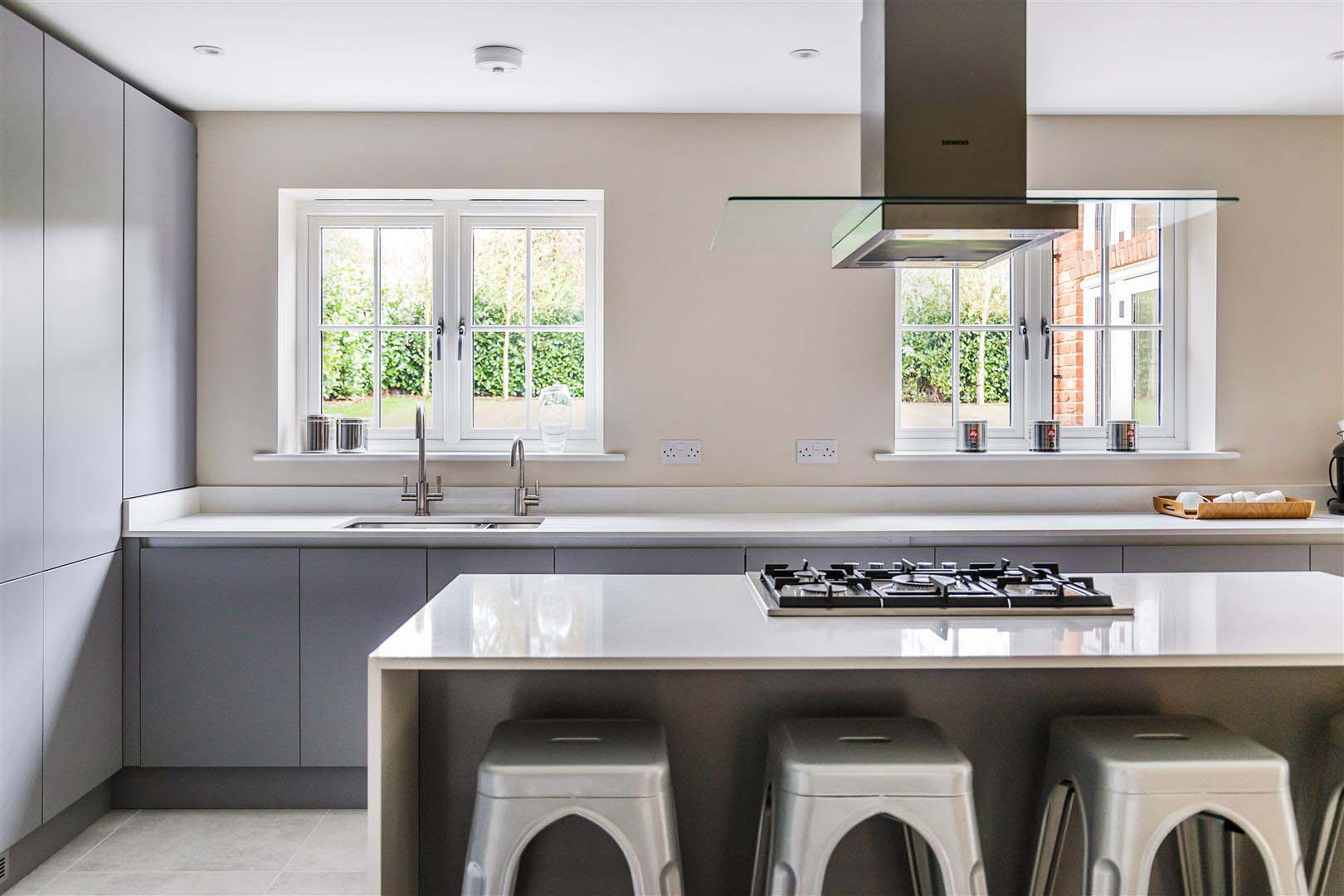
At Timberlook, our heritage-style uPVC windows consistently achieve A-ratings for energy efficiency without compromising on authentic aesthetics.
Here’s how we deliver exceptional thermal efficiency:
Advanced uPVC technology:
Our frames provide excellent insulation, with much less heat loss than traditional timber whilst perfectly replicating the appearance of 19th-century wooden windows.
Optimised glazing:
Our windows feature high-performance double glazing with low-E coatings and insulating gas fills that maximise thermal efficiency and control solar gain.
Multi-chambered design:
The internal structure of our frames incorporates multiple chambers that trap air, creating additional insulation that reduces heat loss.
This combination means Timberlook windows deliver outstanding energy performance whilst maintaining aesthetic appeal. Whether you love the look of timeless timber windows or live in a period property, Timberlook is designed to deliver the looks of classic timber window designs while still offering the benefits of modern uPVC technology.
What makes Timberlook different?
At Timberlook, we’ve solved a problem that has challenged homeowners for years: how to achieve outstanding energy efficiency without compromising on heritage aesthetics.
Our authentic wood-effect windows replicate traditional 19th-century timber designs so convincingly, they’re approved for use in conservation areas – yet they still achieve A-ratings for energy performance.
We offer a huge range of woodgrain finishes and colours, from classic Golden Oak to contemporary Anthracite Grey, plus heritage cill options that perfectly capture period detailing.
Unlike real timber, which requires regular maintenance and can warp or rot over time, our uPVC heritage windows deliver superior thermal efficiency with concealed trickle vents that maintain the authentic look, require virtually no upkeep, and cost significantly less to install and run.
Whether you’re restoring a period property or building a contemporary home, Timberlook windows give you the best of both worlds: the timeless charm of traditional timber with the practical benefits of modern, energy-efficient materials.
What’s the difference between U-values and WER ratings?
U-values measure heat loss through the window (lower is better), whilst WER ratings consider multiple factors including U-value, solar heat gain, and air leakage. The WER provides a complete picture of energy performance, giving you a single A-G grade for easy comparison.
Get the Timberlook treatment: speak with our team today
Understanding window energy ratings empowers you to make confident decisions about your home improvement project.
With Timberlook’s A-rated heritage windows, you can achieve outstanding thermal efficiency, reduce your heating bills, and maintain the authentic character of your property – whether it’s a period home in a conservation area or a contemporary new build.
Contact our expert team today to discuss your project and find a Timberlook installer in your local area. Complete our online contact form or call us on 01253 888 222.
Related posts